
Forklift Spare Parts and After-Sales: A Buyer’s Guide
21 Sep 2026
Evaluating forklift spare parts and after-sales support comes down to five checks: which spares to keep on site, where parts come from, how long they take to arrive, what the warranty really covers, and whether the supplier can deliver all four. Buyers who assess these before ordering avoid the most expensive problem in material handling: a machine idle while a small component waits for shipment.
Parts and support usually matter more than the purchase price of the truck. A forklift can lose a week of work over a failed hose or sensor, and public industry references put a single unplanned breakdown at roughly 3.32 hours of downtime on average, before the wait for a part. Across a busy shift schedule, a slow parts channel costs more than any saving on the invoice, a logic that also drives the warranty and resale comparisons in our heavy-duty diesel forklift buying guide.
The first practical step is a critical spare parts list, split into consumables and long-lead items. Consumables such as filters, brake parts, oil, hoses, and tires wear predictably and belong on the shelf; long-lead items such as controllers, motors, and transmission parts are costly to stock and should be sourced on demand. The test for what counts as critical uses two questions: would failure stop the line, and can it be sourced locally within one shift? Parts that fail both belong in your own inventory.
The second check is where parts come from, and the risk boundary differs by component. Safety-critical parts such as brakes, steering, and mast components should be genuine or OEM-approved, because a failure causes injury and corners are invisible until the worst moment. Standard consumables such as filters, belts, and lamps can come from reputable aftermarket suppliers, provided part numbers and specifications match exactly. Ask suppliers which categories they treat as OEM-only, and treat a vague answer as a warning sign.
The third check is lead time and cross-border logistics, where overseas buyers feel the difference most. Lead time depends on stock, production, and shipping mode: air freight can cost more than the part, while sea freight extends downtime. Experienced buyers order consumables before the season starts and hold suppliers to a stated dispatch time; customs and duties belong in the calculation, because a part held at clearance is not on the shelf.

The fourth check is warranty and response, which should be read as a process rather than a duration. A warranty period means little without a defined claim procedure: who to contact, what proof is required, how quickly claims are acknowledged, and whether replacements ship before the failed part is returned. Ask for these steps in writing, and test them with a small order; the response to a small claim predicts the response to a serious one.
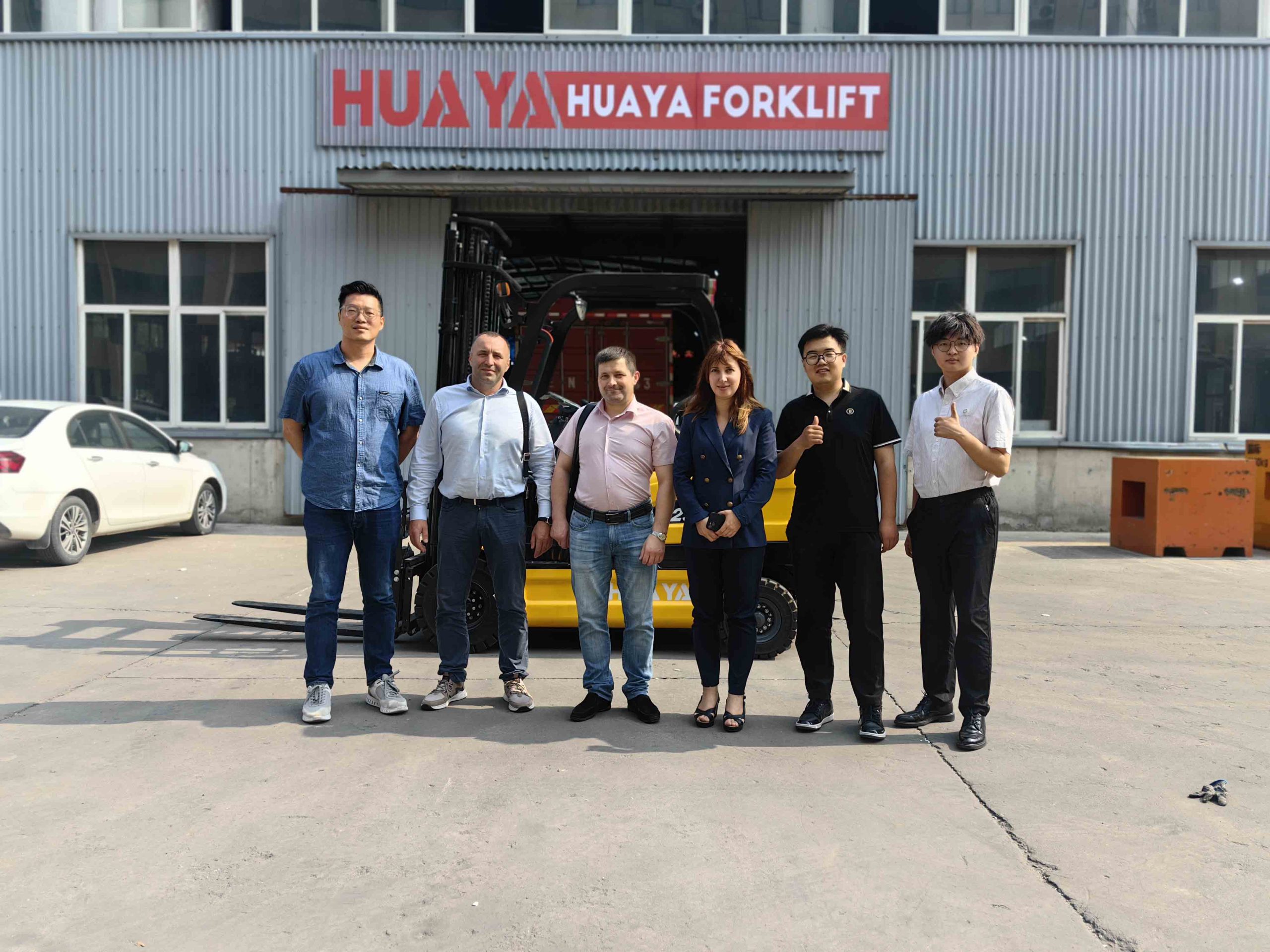
The fifth check is the supplier itself, and five questions separate real support from a sales promise. Ask for the spare parts catalogue and part-number system, so parts can be identified years later. Ask for a written lead time commitment per part category. Ask what stock the supplier or factory holds for your model. Ask which technical support channels exist, in which language and time zone. Ask for references from export customers, since a delivery history beats any brochure; the experience in our article on how HUAYA delivered to customers in Germany is the kind of reference this check should surface.

Parts planning works best tied to the maintenance schedule rather than to breakdowns. A routine that inspects tires, filters, hoses, brakes, and batteries on a fixed cycle reveals wear before failure and converts emergency purchases into planned orders. The checks and intervals are set out in our forklift maintenance checklist, and the parts list should be built from its findings, with quantities set by fleet size and duty.
Over the whole life of a truck, replacement timing matters as much as replacement quality. Parts wear at different rates, and knowing the service life of major assemblies lets an operation schedule replacements during planned downtime instead of waiting for a failure. Public benchmarks for electric trucks and batteries, including the cycles and end-of-life signals in our article on the lifespan of an electric forklift, help buyers budget years ahead and compare suppliers on lifetime support rather than unit price.
Before placing the order, request three documents: the spare parts list with part numbers, the stated lead times by category, and the warranty terms including the claim procedure. A supplier who provides all three in writing can be held to the numbers; one who will not is a risk to every shift. Request a spare parts list and warranty terms from HUAYA and compare them against the checklist in this guide.

Hot Products
Forklift Mast Guide: 2-Stage vs 3-Stage vs Full Free Lift
Rough Terrain Forklifts: When Does Your Site Need One?
Cold Storage Forklifts: A Complete Selection Guide
New vs Used Forklifts: A Smart Buying Decision Guide


